
Endpoints
Unique DNS resolvers that enforce one or more Profiles.
TLDREndpoints are unique DNS resolvers that enforce Profiles (sets of rules). These should be mapped 1:1 with physical devices, which can be used by one or more people. An Endpoints has its own settings which can govern advanced behaviors.
What are Endpoints
An Endpoint is a unique DNS resolver that enforces one or more Profiles (policies). Profiles can be swapped manually, or using a schedule.

Add an Endpoint
To add a device, click the green + button in the Endpoints section. Then choose the device type you're looking to add.
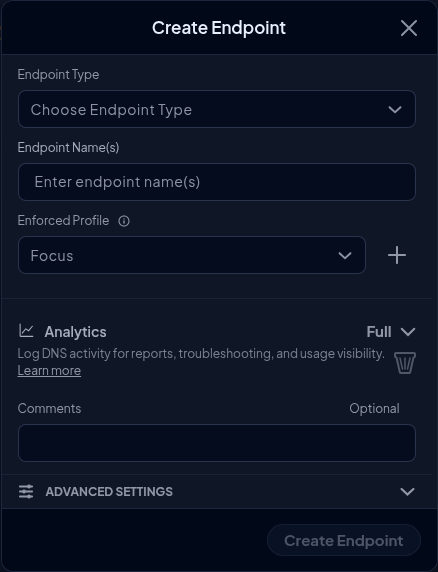
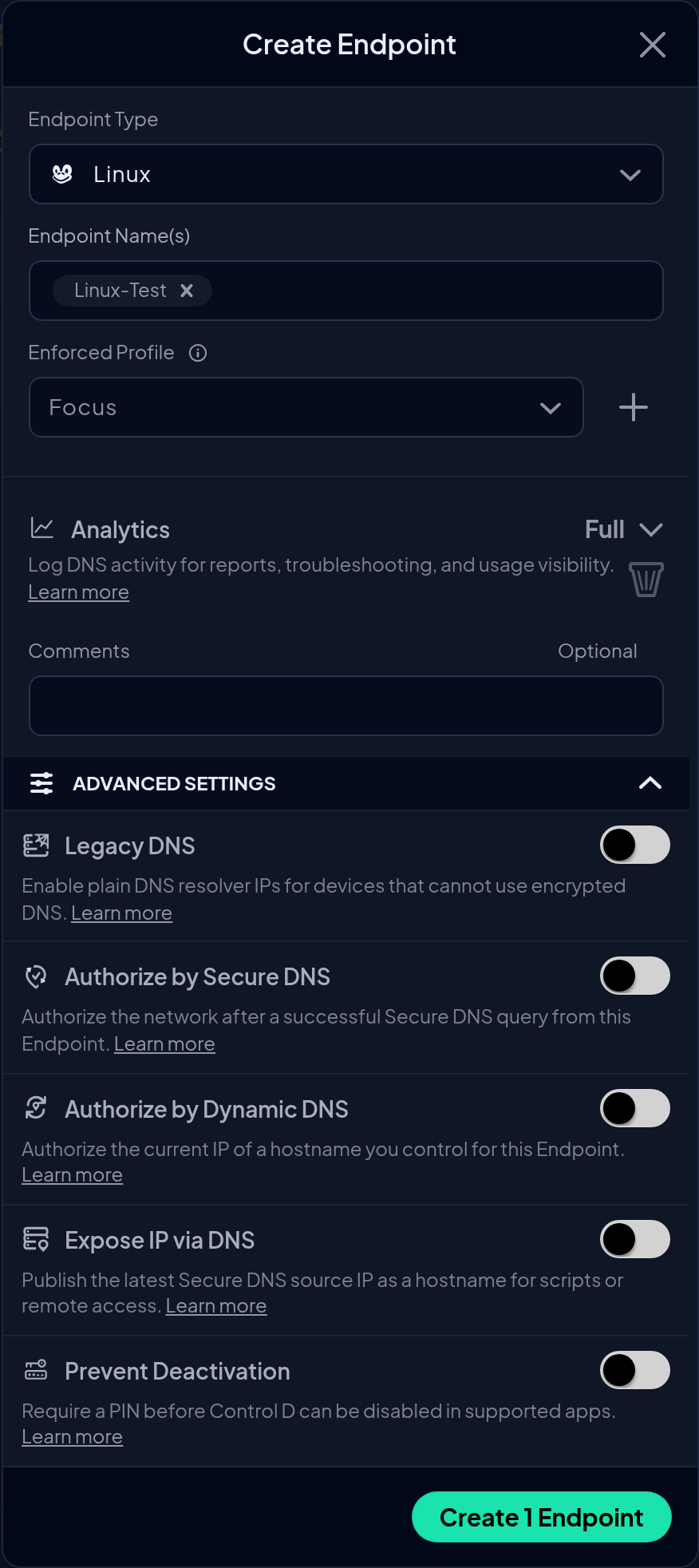
Once the type has been chosen, you can customize the Endpoint Settings that you're interested in. In most cases, you can leave the settings in their default state.
Endpoint Groups
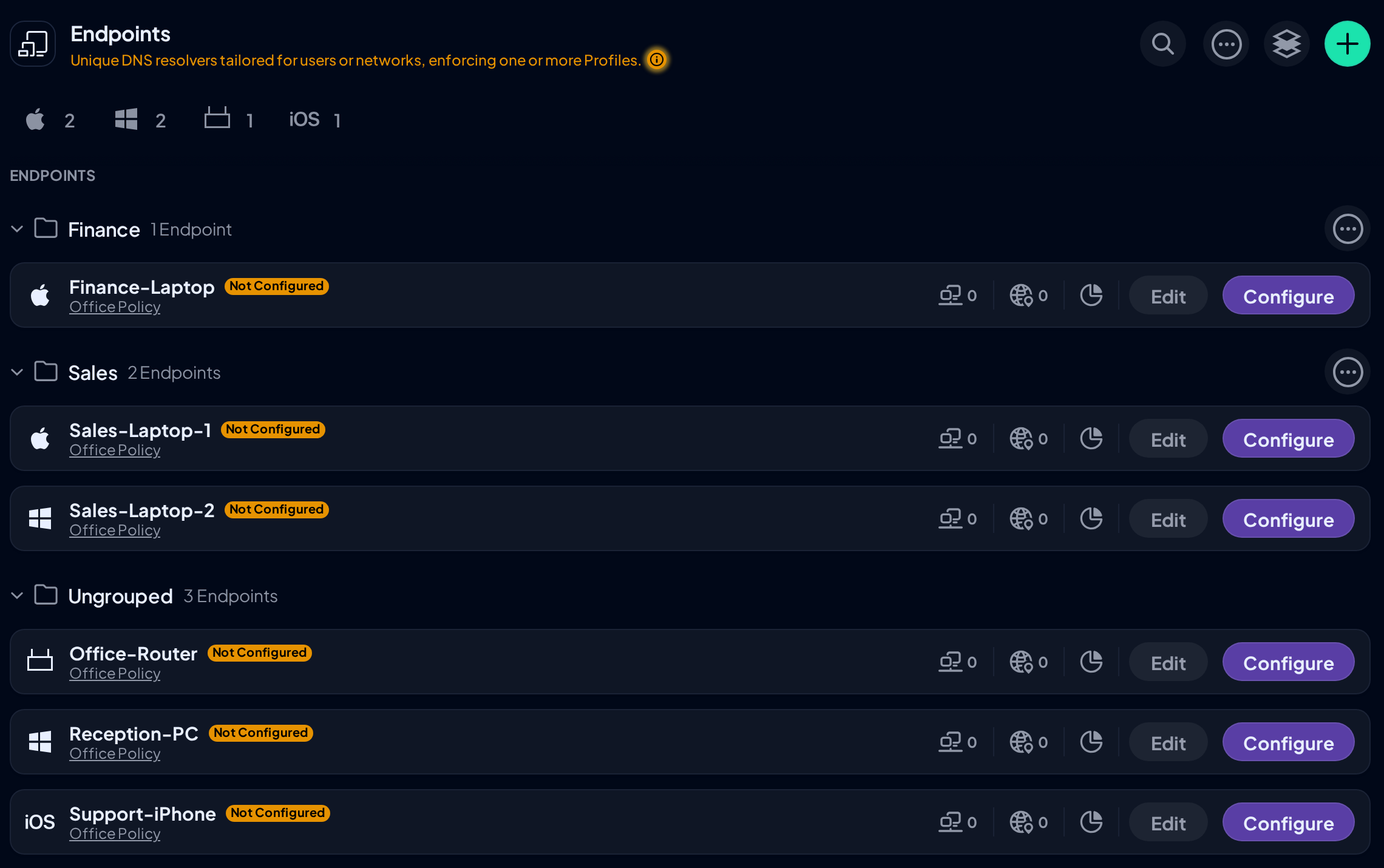
Endpoint groups are named folders that organize the Endpoints page. Each Endpoint can be in one group at most. Endpoints that are not in a group are listed under Ungrouped. Groups only change how the list is organized. They do not change which Profile an Endpoint enforces or any of its settings.
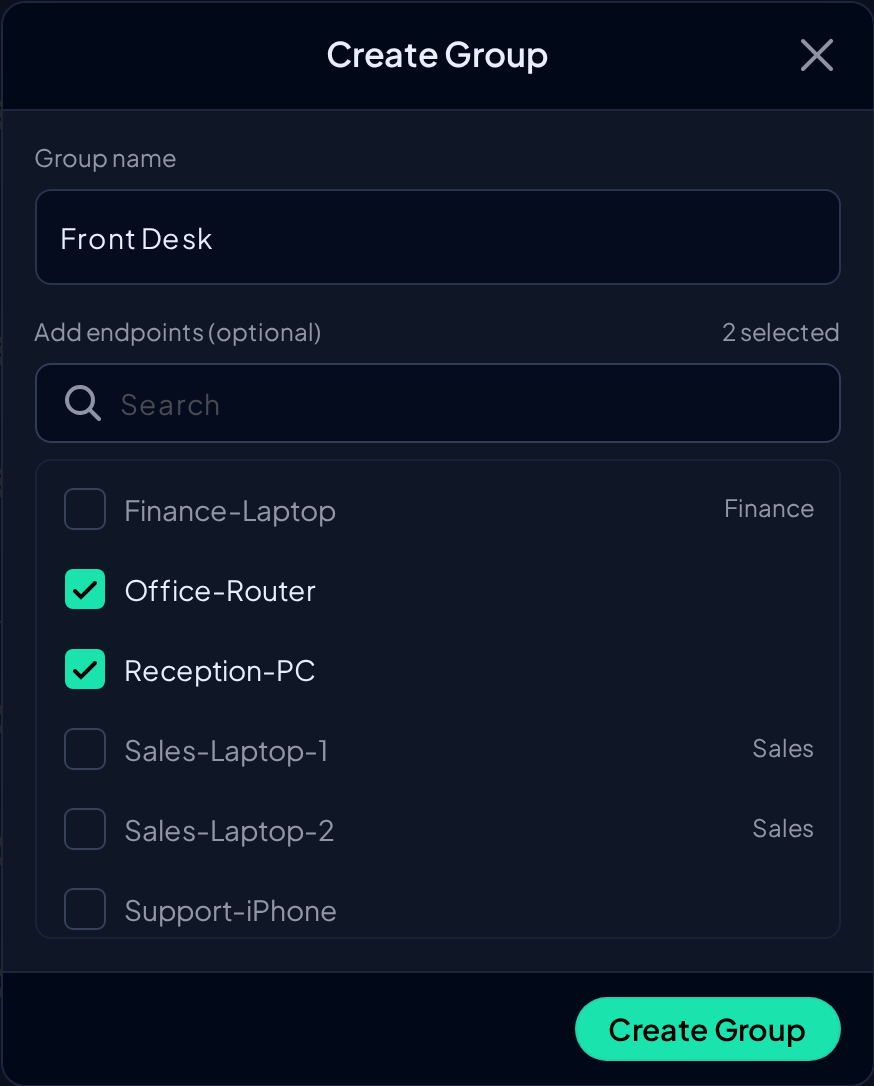
Create a group
- On the Endpoints page, open the options menu (⋯) and select Create group.
- Enter a Group name (up to 64 characters).
- Optionally, tick the Endpoints to add to the group. Each Endpoint shows the group it is in now. Ticking it moves it out of that group.
- Select Create Group.
When you have at least one group, the Endpoints page lists one section per group, followed by Ungrouped. Select a section header to collapse or expand it.
Add Endpoints to a group
- One Endpoint: Edit the Endpoint and choose a group in the Group dropdown. Select Ungrouped to remove it from its group.
- Several Endpoints (Organizations): Select the Endpoints, select Move Endpoints, choose a group in Choose Group, and confirm. You can also choose New group… to create a group for the selected Endpoints.
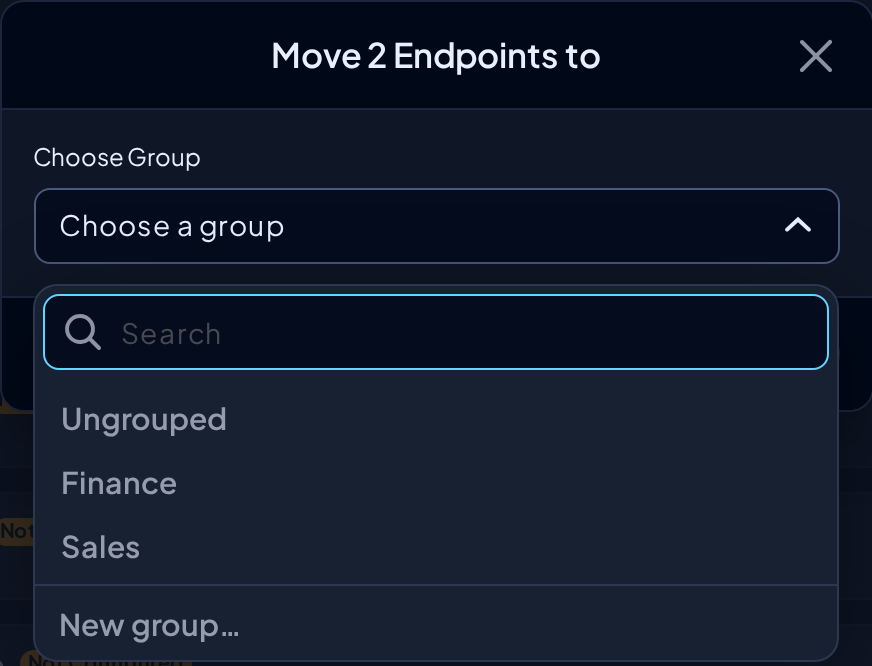
Rename or delete a group
Open the actions menu on a group's section header and select Rename Group or Delete Group. Deleting a group never deletes its Endpoints. They move to Ungrouped.

Endpoints Settings
To learn more about various Endpoint Settings, select a sub-page from the navigation menu on the left.
Setting Up
Once you've created an Endpoint, you will be presented with the Endpoint specific DNS resolvers. If you know what to do with them you're done here. Otherwise, click the Help Configure button to kick off the step-by-step tutorial.

Export Endpoints to CSV
To download your Endpoint list as a CSV file, open the options menu (⋯) on the Endpoints page and select Export to CSV.
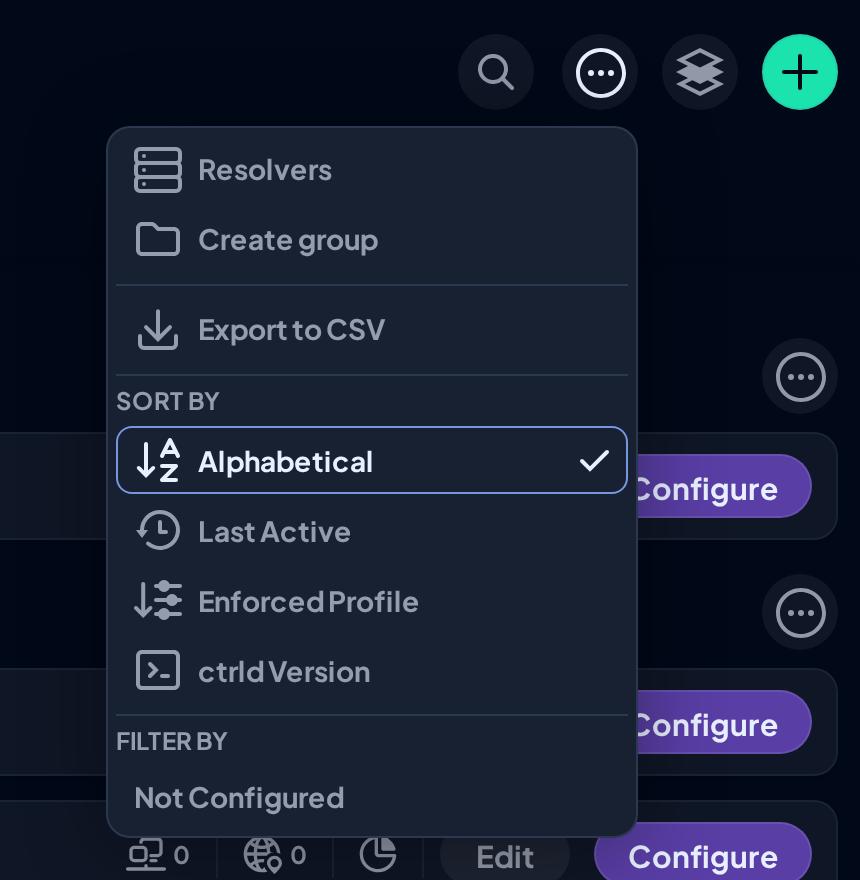
The file includes every Endpoint in your account or Organization, even if a search or filter is narrowing the list on screen. It has these columns:
- Endpoint Name
- Endpoint ID
- Device Type
- App Version
- Comments
- Profile
- Status
Export to CSV is unavailable while the list is loading or when there are no Endpoints.
Updated about 2 hours ago